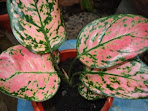
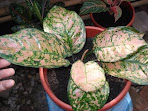
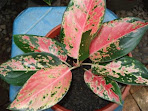
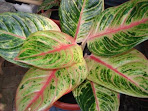
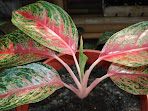
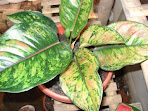
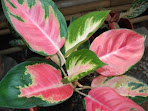
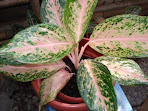
One of my favorite groups of plants is the aroid family Araceae. This family has brought us so many great and wonderful indoor plants. Everything from Philodendrons, Spathiphyllum, Anthurium, Pothos, Alocasica, Dieffenbachia and Aglaonema, with dozens of others.
Since the 1980's, Anthuriums and Spathiphyllums have received most of the attention of the plant breeders. They've introduced many new varieties, flower colors, sizes and leaf textures.
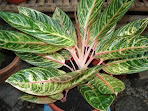
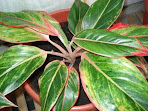
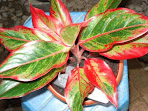
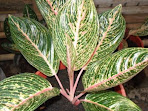
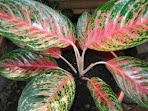
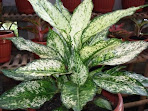
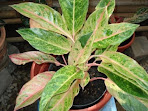
Now it's the Aglaonemas turn. In the last 5 years about 20-25 new varieties have been introduced. Some have already fallen by the wayside and some of the old varieties are making a comeback.
The Aglaonema has been grown for centuries an has served as a workhorse for the professional plantscaper for the past 30 years or more. Until recently the choices were limited to about 4 varieties. The most popular being "Silver Queen".
Aglaonemas have remained popular even with limited varieties. One downside to Ag's is that they really don't like the cold weather, drafts. Aglaonemas don't like and exposure to low temperatures. This factor alone can simply limit where you can use these tough indoor plants as well as transporting them during the winter.
Many of the new Aglaonemas coming to market are being bred to have one very important characteristic. They must be able to handle much lower temperatures. This alone opens up quite a few new avenues:
• There will be more varieties grown
• Production cost should be lower since heating bills should be lower
• Less chance of cold damage in transport
• More places that the Aglaonema could be used inside
More cold tolerance is just one area of improvement as well as:
• Many new leaf patterns
• Different color combos.
• White or cream colored stems
• Wider leafs
• Taller plants
• Fuller plants
• and the list goes on.
A couple of varieties to keep on the look out for is Aglaonema "Silver Bay", Aglaonema "Jewel of India" and Aglaonema "Silver Ribbon". They all sucker well which helps them not to get leggy, have good color and handle the cooler temperatures.
Although Aglaonemas have been used for decades indoors, with all the new varieties coming to market this spring it's going to give you a lot more choices indoors. I'm looking forward to seeing what's around the corner.
Make sure you check your local nursery for these new varieties. If they don't have them... all it should take is a simple call to their plant supplier.
Just a plant or two can provide a whole new look inside. One of the best features Aglaonemas have is that they are very versatile and easy to care for... if you know the basics.
Since the aroid family has always been one of my favorites and I started collecting them back in my teen's. They hold a special place in my plant growing history. They are the plants that really taught me "how to grow".
In fact, our second eBook, is devoted Aglaonemas. It covers some of their history, production, old and new varieties, care and disorders. All wrapped up in 80 plus "e-pages" with color pictures, plant specifications and more. It's easy to read (not techie) and written for you, homeowners, plant professionals and garden center personnel.
Source: www.plant-care.com
Selasa, Desember 02, 2008
A Favorite Indoor Plant - Chinese evergreen
Selasa, November 11, 2008
Creating Indoor Gardens
 Indoor gardening can be tricky and there is definitely an art to doing it right. There are five important factors to consider when starting your own indoor garden; light, temperature, water, nutrition, and soil.
Light
Light is the main source of energy to manufacture food and different plants need differing amounts, which are designated as low, medium, high or very high light.
Temperature
Most varieties of indoor plants do well under normal household temperatures in the range of 70 to 80 degrees during the day and 60 to 65 degrees at night. Most tropical indoor plants will tolerate temperatures below that and can be damaged by ‘chilling injury’ if they are.
Water
One of the most common problems is improper watering. Some plants thrive in drier conditions while other must be kept moist at all times. Too little water can cause wilting and too much water can cause root rot problems.
Don’t let the surface of the soil be your guide. Be sure to feel the soil by pushing your finger in an inch or so below the soil’s surface to determine whether or not more water is needed. Another option is investing in a ‘watering meter,’ which can give you an easy and accurate indication of when your plants need watering.
Tap water is completely satisfactory for most indoor plants and once a month, plants should be put in the sink and watered thoroughly to leach salts from the soil.
Soil
Most nurseries sell a variety of soil mixes for indoor gardening and as long as they have good drainage abilities, are aerated and have good water and nutrient holding capacity, they will be very satisfactory. It is not necessary to use specialty mixes for most types of houseplants.
Fertilization
Most houseplants have reduced fertilizer requirements because of their indoor environment and nutritional problems usually result from overfertilization rather than lack of nourishment. In some cases, specialty fertilizers are needed, but they are the exception.
There are literally hundreds of plant species to choose from that are suitable for your indoor garden. Here is a list of some of the most common varieties.
African Violet - among the most popular of flowering indoor plants and are available in multiple colours.
Aglaonema - compact, low-growing and hardy. A tough plant well suited for the indoors.
Begonia - an excellent indoor plant if there is adequate light.
Cast-iron Plant - often overlooked but a very hardy plant that will persist under difficult conditions.
Coleus - commonly grown outdoors in summer for its colourful foliage. It is a good indoor plant if adequate light is provided.
Dracaena - common varieties include solid green or striped foliage. All are dependable plants, especially where height is needed.
Fern - some types suffer from low humidity indoors so they make a good kitchen or bathroom plant.
Ficus - tolerant of a wide range of environmental conditions but sometimes reacts to rapid changes in environment by almost total defoliation.
Geranium - popular outdoor plants as well as good indoor plants that will flower continuously if they are given adequate light.
Jade Plant - very susceptible to overwatering and resultant leaf drop.
Palm - not the easiest of indoor plants to grow, but popular because of their height and graceful character.
Peperomia - most are small compact plants, but leaf size, shape, texture, and coloration vary widely. Peperomias are easily overwatered.
Philodendron - there are numerous species and varieties cultivated, and they differ widely in growth habit, leaf size, and height.
Pothos - one of the easiest of indoor plants to grow, well adapted to hanging baskets.
Snake Plant - one of the easiest indoor plants to grow.
Spathiphyllum - one of the most satisfactory plants for low light situations.
Spider Plant - very easy to grow and is very adaptable for hanging baskets. All are susceptible to fluoride tip-burn from tap water so be careful.
Wandering Jew - fast growing, trailing plants. Many have variegated leaves. The underside of some are also brightly purple colored.
Wax Plant - some varieties are vigorous vines which climb by means of twining. Many have highly variegated foliage, which is sometimes deeply curled or crinkled.
Yucca - grow upright and stiff and may become somewhat grotesque in appearance with age. The plant is often confused with Dracaena, but require much higher light intensities.
Written By: Ann Zaza
Source :www.wnetwork.com
Picture :
Decorative plants work to absorb air pollution

Decorative plants can be grown almost anywhere and when placed around the yard, can make the home environment more pleasant.
Likewise, decorative plants grown in a pot can also beautify the interior of a home.
Nowadays, people are starting to look more closely at plants that absorb air pollution. Such plants offer double benefits: Apart from decorating a room, they also absorb poisonous substances that circulate in air.
According to the National Aeronautics and Space Administration (NASA)'s Report on Interior Plants for Indoor Air Pollution Abatement, there are as many as 29 varieties of decorative plants that are able to absorb pollution from the air.
"The best plants for absorbing poisons can be placed inside the home," said Saiful Sulun, an agricultural researcher from the Winasari Garden in Bogor, West Java.
According to environmentalists who cultivate decorative plants, small trees and shrubs that function as absorbents of air pollution are suitably placed inside the home or office. Likewise, in areas where people smoke.
Saiful, who was a speaker in a discussion on the properties of decorative plants at the 2008 Flora Exhibition, which was held at Banteng Field, Jakarta, in August, said there were some varieties of decorative plant that could be used as anti-pollution plants around the home.
Among them are the yellow palm (Chrysalindocarpus lutescens) the Paris lily (Cholorophyllum clevelandii), blanceng, or Chinese evergreen (Araceae), sirih gading (Scindapsus aureus), lidah buaya (Aloe vera) and lidah mertua, or sansieveira (Sansieviera trivasciata).
It has been proven that the lidah mertua (translated as "mother-in-law's tongue") plant, for example, has a special ability to neutralize polluted air: According to research conducted by NASA, the leaves of the lidah mertua are able to absorb formaldehyde at the rate of 0.938 grams/hour.
In a room measuring 75 square meters, for example, only four leaves of an adult sansieviera plant are required to keep the room free of pollutants.
Formaldehyde is a colorless gas that inhibits breathing. It can come from the smoke of burning forests, and the fumes from vehicle exhaust systems and cigarette smoke.
This dangerous gas is often used to preserve dead bodies, as a preservative in paint, an ingredient in cosmetics and medicines, and in timber processing.
The Paris lily and yellow palm are beneficial in absorbing carbon monoxide, a major air pollutant. This dangerous substance, which is produced from vehicle and factory emissions, is one of the principal gasses causing global warming.
Yellow palm varieties are known to be particularly useful as pollutant absorbers, as they are able to produce as much as one liter of water vapor in 24 hours, which allows this plant to soak up a larger volume of poisonous gasses.
The aglaonema plant (Aglaonema brevispathan) can also absorb formaldehyde and benzena. Benzena is a dangerous chemical compound that is found oil, fuel and cigarette smoke, which can cause vomiting and headaches in humans when exposed to high doses.
Saiful said decorative plants have the special ability of absorbing poisons, while being easy to maintain. The plants can be placed inside a room, but can also be moved outdoors.
"They have to be routinely looked after and get exposure to sunshine. That's why pot plants kept inside the home should be regularly put outside to sunbathe every two or three days," she said.
Saiful suggested alternating potted plants of the same variety, so that when one is sunbathing, a replacement is still present in the home. Organic fertilizers or compost can be used to maintain plant health.
In the plant trade, decorative plants and varieties of anti-pollutant plants are easily found. Prices vary depending on the plant varieties, their age and their features, such as the form of their leaves and colors.
At the Flora and Fauna 2008 Exhibition, a medium-size potted sansieviera plant was priced from between Rp 15,000 to Rp 50,000 (US$1.50 to $5). Meanwhile, aglaonema seedlings were priced at around Rp 25,000 ($2.50) per punnet.
Apart from making rooms more beautiful, it is clear that some decorative plants have other benefits. By using plants to absorb gases and pollutants in the home, an environment can be created that offers fresher, healthier air to breathe.
In this age of increased environmental awareness, improving our surroundings can begin in the home - it's as simple as keeping potted plants. (Bambang Parlupi , Contributor , Jakarta )
Source : www.thejakartapost.com
Picture: The lidah mertua (Sansieviera trivasciata- JP/Bambang Parlupi)